
TL;DR: Key Takeaways Upfront
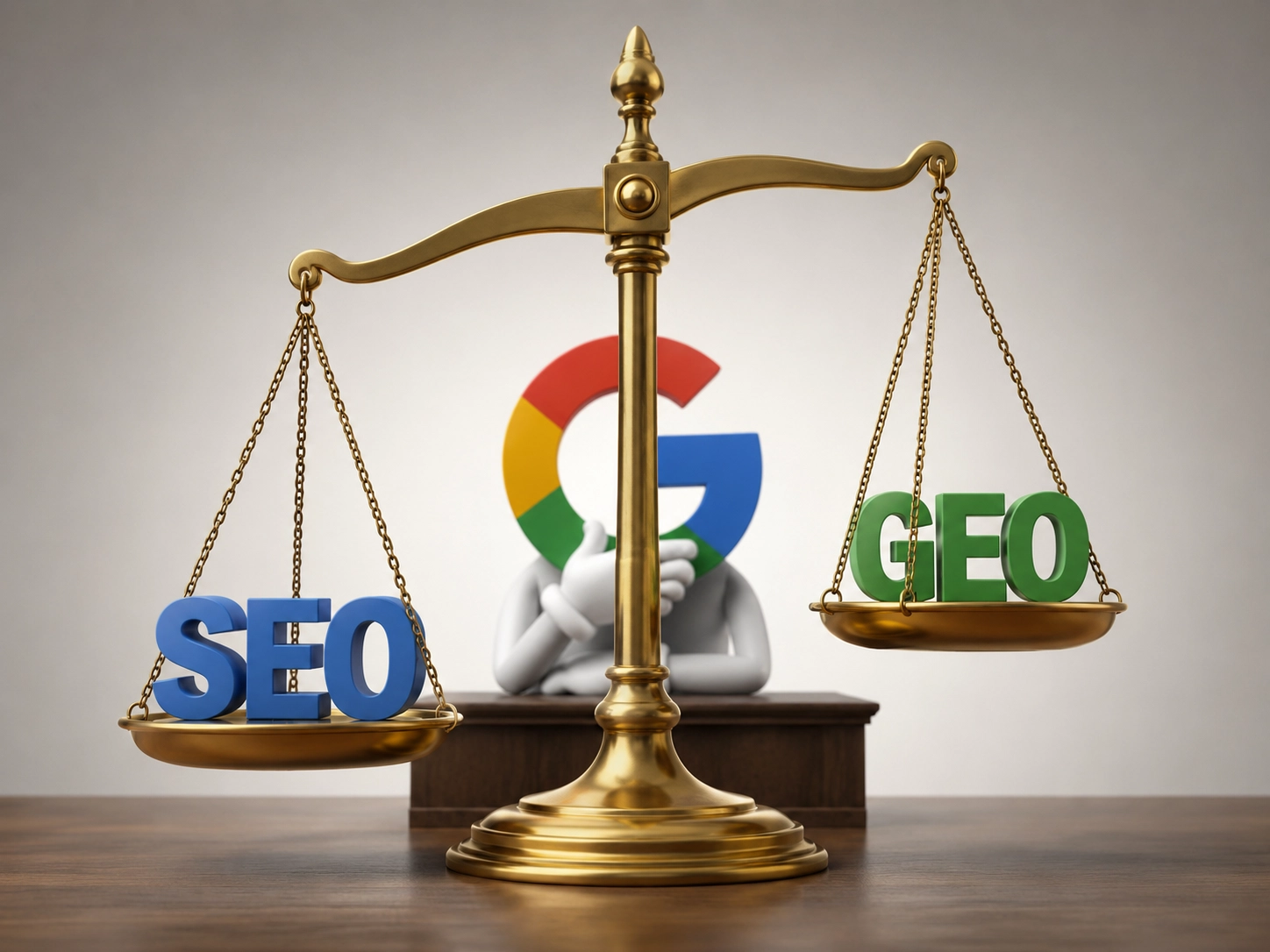
- Official Stance: On May 15, 2026, Google explicitly denies the existence of standalone "AI SEO" rules. The visibility in AI Overviews (AIO) still relies on traditional crawling, indexing, and snippet generation mechanisms.
- Myths Busted: The official guidelines debunk the marketing concepts circulating in the GEO/AEO (Generative Engine Optimization / Answer Engine Optimization) communities, clearly stating that there is no need for
llms.txt, exclusive AI Schema, or artificial text chunking just to cater to AI. - Content Baseline: AI-generated content itself is not a violation, but "scaled content abuse" will be penalized as spam. The "human experience value" within E-E-A-T has become the core competitive moat.
- Future Trends: SEO is evolving into "Information Engineering." The ultimate goal of future website optimization is to enhance "machine operability" to prepare for the era of Agent-driven search.
Industry Background & Event Characterization: The End of the AI SEO Anxiety War
Industry Status: Over-Amplified Tech Panic Over the past year, the concept of GEO (Generative Engine Optimization) has been heavily over-marketed within the industry. Many SEO practitioners have fallen into severe "tech anxiety," attempting to rebuild their websites to cater to the supposed preferences of Large Language Models (LLMs).
A Reflection of History: The Underlying Logic Remains Unchanged Looking back at the initial industry reactions to Mobile-First Indexing and Voice Search, we find that history is repeating itself. Although the presentation formats are changing, the underlying logic of search engines providing high-quality information remains consistent.
"The core purpose of Google's announcement is crystal clear: to redirect the industry's attention from 'how to trick AI' back to 'how to build high-quality content structures'."
Official Debunking & Community Controversies: The Over-Packaged "AI Optimization Myths"
Addressing the Pain Points: Baseless GEO Tactics To quell community speculation, Google's official documentation systematically refuted several recently hyped "pseudo-requirements."
- Myth 1:
llms.txtand Exclusive AI Schema Google explicitly states that it does not support such non-standard protocols. Traditional Structured Data remains the only standard for helping machines understand page content. - Myth 2: "Keyword Variations" to Cater to LLMs Modern AI possesses exceptionally strong semantic and search intent understanding capabilities. Deliberately stuffing long-tail keywords like "Best AI Answer" on a page is not only meaningless but may also trigger keyword stuffing penalties.
- Myth 3: Artificial Text Chunking Some AI SEO tools have manufactured the anxiety that "long-form content cannot be digested by AI." In reality, Googlebot is fully capable of parsing lengthy, multi-topic HTML documents without the need for artificial chunking.
Tracking Community Hot Topics: Expert Empirical Feedback According to discussions among top SEO experts on Search Engine Roundtable and X (Twitter), extensive empirical data shows that websites blindly following "AI-exclusive code" trends have not received any additional traffic boosts in AI Overviews.
Technical Underpinnings: AI Overviews Remain Subject to Traditional Search Console Rules
Crawling and Indexing: The Absolute Prerequisite for AI Visibility
Pages that are not properly indexed by Google will never appear in AI Overviews. Webmasters must prioritize resolving foundational technical SEO issues such as robots.txt blocks, insufficient crawl budget, and JavaScript rendering failures.
Data Validation: Troubleshooting via GSC When webmasters are diagnosing "AI traffic loss" issues, they should return to Google Search Console (GSC).
- Check Crawl Stats to confirm Googlebot's access frequency.
- Review Page Indexing (Coverage) reports to troubleshoot "Crawled - currently not indexed" URLs.
- Utilize the Performance report to compare changes in impressions and CTR (Click-Through Rate) for core keywords.
Core Algorithm & Content Strategy: Defining Helpful Content in the AI Era
The "Original Sin" and "Pardon" of AI Content Google does not penalize AI-generated content inherently; what it truly targets is "scaled content abuse." If AI is used to programmatically generate spam with no incremental value, it will inevitably be hit by algorithmic penalties.
E-E-A-T Weighting Shift: The Rise of Human Value Against the backdrop of AI content proliferation, E-E-A-T (Experience, Expertise, Authoritativeness, and Trustworthiness) has become more crucial than ever. "Human touch" elements, such as empirical data, first-hand experience, and original comparisons, have become the most robust traffic moats.
"The key differentiator between 'high-quality content assisted by AI' and 'programmatic spam triggering algorithmic penalties' is whether the content provides authentic experiences that AI cannot fabricate out of thin air."
Traffic & SERP Volatility Analysis: The Core Concern for SEO Practitioners
Aggravated Zero-Click Searches: The Attrition of Informational Queries With the widespread adoption of AI Overviews, simple informational queries will inevitably experience traffic loss. Webmasters need to adjust their mindset and accept the natural decay of this low-conversion traffic.
Deepening Traffic Funnel: High-Value Search Intent Remains Solid Traffic driven by long-tail, in-depth, and transactional intent remains highly stable. When making purchases or deep decisions, users still need to click through to websites to acquire comprehensive information. The conversion rate (CVR) for this segment of traffic may even be higher.
Data Analysis Tip: Beware of Misjudging Ranking Fluctuations Recent SERP volatility has been intense, but webmasters should not hastily misattribute normal Core Update fluctuations as demotions caused by AI search, which could lead to adopting incorrect remedial measures.
Long-Term SEO Impact: Moving from "Content Retrieval" to "Agent Machine Operability"
Hidden Signals: Evolving Toward an Agent Model Reading between the lines of the official documentation, it's evident that Google Search is evolving from merely "understanding text" to "executing tasks." The search engine of the future will function more like an omnipotent Agent.
The Rise of Information Engineering: Structure Replaces Stuffing Information Engineering will become the core of next-generation SEO. Semantic HTML, clear DOM structures, and accurate price/inventory parsing will gradually replace traditional link building and keyword stuffing.
The SEO Value of Accessibility: Machines Need Clear Navigation Too Future Agents will act much like visually impaired users, relying on clear page structures to "operate" a website. Robust Accessibility (a11y) design will directly enhance a website's "machine operability."
Webmaster Response Strategies & Practical CheckList
Reject Empty Theories, Take Immediate Action: To adapt to the underlying logic of AI search, we recommend webmasters immediately execute the following optimization checklist:
- Content-Level Optimization: Drastically prune zero-value, AI-fluff content and increase authentic case studies and subject matter expert (SME) perspectives.
- Page-Level Optimization: Streamline Heading hierarchy (H1-H6 logic), and rationally utilize FAQs, Tables, and Summaries to significantly boost the machine information extraction rate.
- Technical-Level Optimization: Ensure critical information is fully text-based (avoiding image-only communication), improve Server-Side Rendering (SSR) coverage, and build a robust internal linking architecture (Topic Clusters & Hubs).
Final Advice for SEO Practitioners
Do not waste your energy and budget on so-called tools that claim to "crack the AI search black box." The essence of AI search is simply making the search engine behave more like a "smart reader."
When facing a smart reader, the most effective strategy is always to provide content that is structurally clear, authentically credible, and possesses unique experiential value. The future winners in SEO will be the website architects who can perfectly integrate "ultimate user experience (UX)" with "high machine readability."