
TL;DR
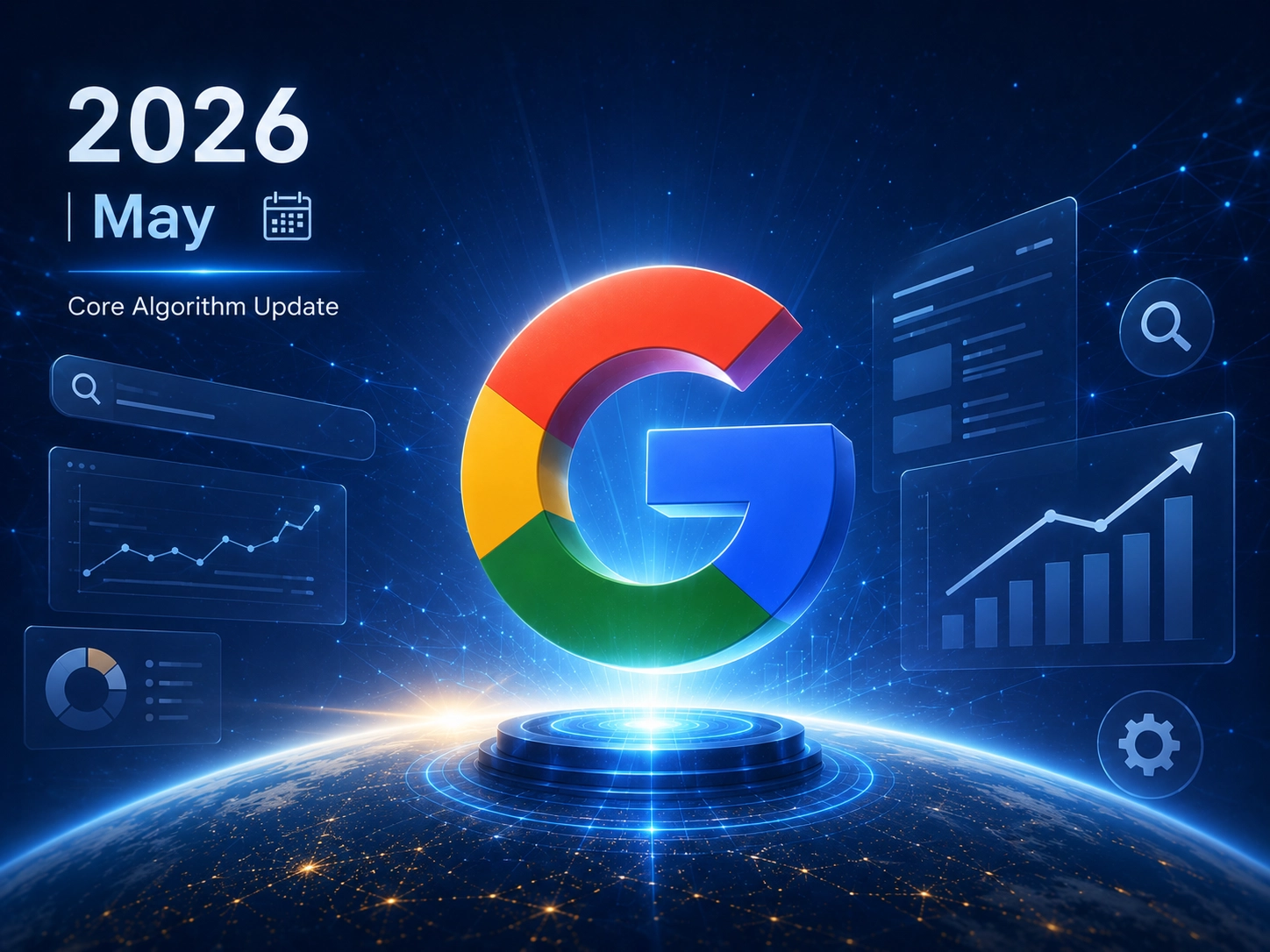
- Event: Google launched a new core update on May 21, 2026, expected to be completed within two weeks.
- Nature: The official definition is a "routine update," aimed at improving the relevance and user satisfaction of search results.
- Industry Focus: Why should we remain highly vigilant about a seemingly routine update? Have "routine descriptions" historically been repeatedly accompanied by significant ranking fluctuations?
- Action: Site owners need to skip meaningless panic and shift to standardized traffic segmentation analysis, SERP competition monitoring, and user intent alignment optimization.
1. Update Basic Information and Official Stance
Core Information
- Start time: May 21, 2026
- Expected completion cycle: Two weeks
- Announcement channel: Google LinkedIn account & Google Search Status Dashborad
Official Discourse Analysis
Google's post on its LinkedIn account regarding this update used phrases like "regular update," "better surface relevant," and "satisfying content for searchers." This is not simply re-emphasizing quality, but a deeper measurement of the extent to which content fulfills user queries.
The word "routine" may just be to calm market sentiment; behind it are often major adjustments to ranking signals.
2. SEO Industry Impact and Ranking Fluctuation Analysis
Fluctuation Warning
- The period during and 1-2 weeks after the core update is the peak time for traffic anomalies.
- Need to distinguish the impact of the update itself from other algorithm adjustments or indexing issues occurring simultaneously.
Impact Scope Speculation
Based on the description of "whole-site content relevance and satisfaction," this update may have a broad coverage, not just targeting specific verticals (e.g., health, finance).
Trend Correlation
Placing this update in the context of multiple core updates from 2023-2026:
- Historically, AI-generated content farms and low-information-increment pages have been frequently hit.
- Under the continuous optimization path, sites with sparse content and excessive aggregation are at the highest risk.
3. Google Search Console Data Interpretation and Anomaly Identification
Data Latency and Illusion
Search Console traffic data has a 2-3 day delay; do not misjudge due to immediate fluctuations.
Key Report Paths
- Compare the "Search Queries" report and "Pages" report before and after the update.
- Lock on pages with click drops >10%.
Distinguishing Core Update from Manual Action
- If the traffic curve drops sharply and no manual action notification is received, it is more likely an algorithmic rating adjustment.
- Avoid mistakenly going through a manual review process; first focus on content analysis.
4. Site Owner Practical Response Strategy: Closed Loop from Observation to Optimization
Step Zero: Determine If Truly Affected
- Exclude seasonal fluctuations.
- Exclude competitor actions.
- Exclude self-technical changes (e.g., site migration, robots.txt changes).
Step One: Targeted Page Audit
- Export the top pages with traffic loss.
- Conduct SERP screenshot snapshot comparison to observe keyword ranking replacements.
- Identify commonalities of winning pages: whether they are original research, unique experience, higher information completeness.
Step Two: User Intent Alignment Check
- Redefine the satisfaction rates for primary, secondary, and latent intents of the affected pages.
- Review whether content format, multimedia assistance, and structured data match the intent trends represented by the currently high-ranking results.
Step Three: Non-Content Factor Verification
- Whether the affected pages have weak E-E-A-T signals (author entity, fact-checking links, brand credibility citations).
- Whether page experience and technical SEO are dragging down evaluation (though not the main cause of core updates, they can have a compounding effect).
5. SERP Change Observation Points
Characteristic Changes
Observe whether featured snippets, People Also Ask, and discussion forum modules are reshuffled or strengthened by this update.
Observed Patterns
After past core updates, pages with "sparse content and excessive aggregation" saw sharp ranking drops. Determine whether the currently affected pages belong to the same category.
Localization Differences
Multilingual/multi-region sites should capture data separately; global traffic cannot be generalized. Different regions may exhibit different fluctuation patterns.
6. Community Discussion Hotspots and Common Misconceptions
Hotspots
- Independent site owners are highly vigilant about the phrase "routine update," thinking it might be the calm before the storm.
- Some forums report cases of low-traffic sites rebounding instead, suggesting the algorithm may have adjusted its evaluation of small original sites.
Misconception Correction
- Misconception: "Core updates penalize websites that use AI writing."
- Fact: The algorithm evaluates content quality and usefulness, not the generation tool. High-quality AI-assisted content can still stand out.
- Misconception: "Making massive changes during the update can speed up recovery."
- Fact: Making disruptive changes during a core update may delay assessment stability. It's recommended to implement after the update is complete.
7. Comparison with Similar Historical Events and Long-Term Impact Deduction
Historical Reference
Comparing the scale and official statements of the March 2024 and August 2024 core updates, the volatility intensity of this "routine iteration" may be comparable.
Long-Term Effects
- Recovery after a core update usually takes several months until the next update.
- There is no quick fix; site owners' improvements will be re-evaluated in subsequent iterations.
Strategy Self-Check
If your site is affected again, you may need to reflect on whether you have fundamentally ignored the "user-first" principle, continuously patching without touching the core.
8. Should SEO Strategy Be Adjusted?
Situations Where Adjustment Is Needed
If traffic continues to decline and analysis confirms a downgrade in content value rating, you must shift to the principle of "increasing information increment," rather than continuing to stuff keywords or backlinks.
Situations Where Panic Adjustment Is Unnecessary
If it's the off-season for the industry or only a small single-digit fluctuation, hastily overthrowing the original quality content structure may backfire.
Verification Method
Use a control group: select similar unaffected pages and conduct A/B content plan testing with affected pages to gradually drive improvement.
9. Data Credibility and Verification Framework
Single Data Source Risk
Relying solely on Search Console can be misleading due to sampling errors; cross-reference with:
- Server logs
- Third-party rank tracking tools (e.g., Ahrefs/Semrush)
Statistical Significance
For small sites with low traffic, fluctuations are easily amplified; recommendations:
- Use statistical methods to distinguish random fluctuations from real declines.
- At least use a two-week moving average to filter noise.
Case Tracking Direction
Track several publicly available case sites (e.g., independent blogs, directory sites) for traffic envelopes 30 days before and after the update to provide reference data for the industry.
Final Recommendations
- Treat this update as a check-up rather than a penalty, and focus resources on user success metrics.
- Establish an internal "Core Update Response SOP" within the enterprise, forming a repeatable process for traffic audits, SERP snapshots, and content intent alignment.
- Continuously monitor Google's subsequent supplementary explanations or data anomaly announcements regarding this update, and after the update is complete, write an internal analysis report to accumulate knowledge for the next iteration.