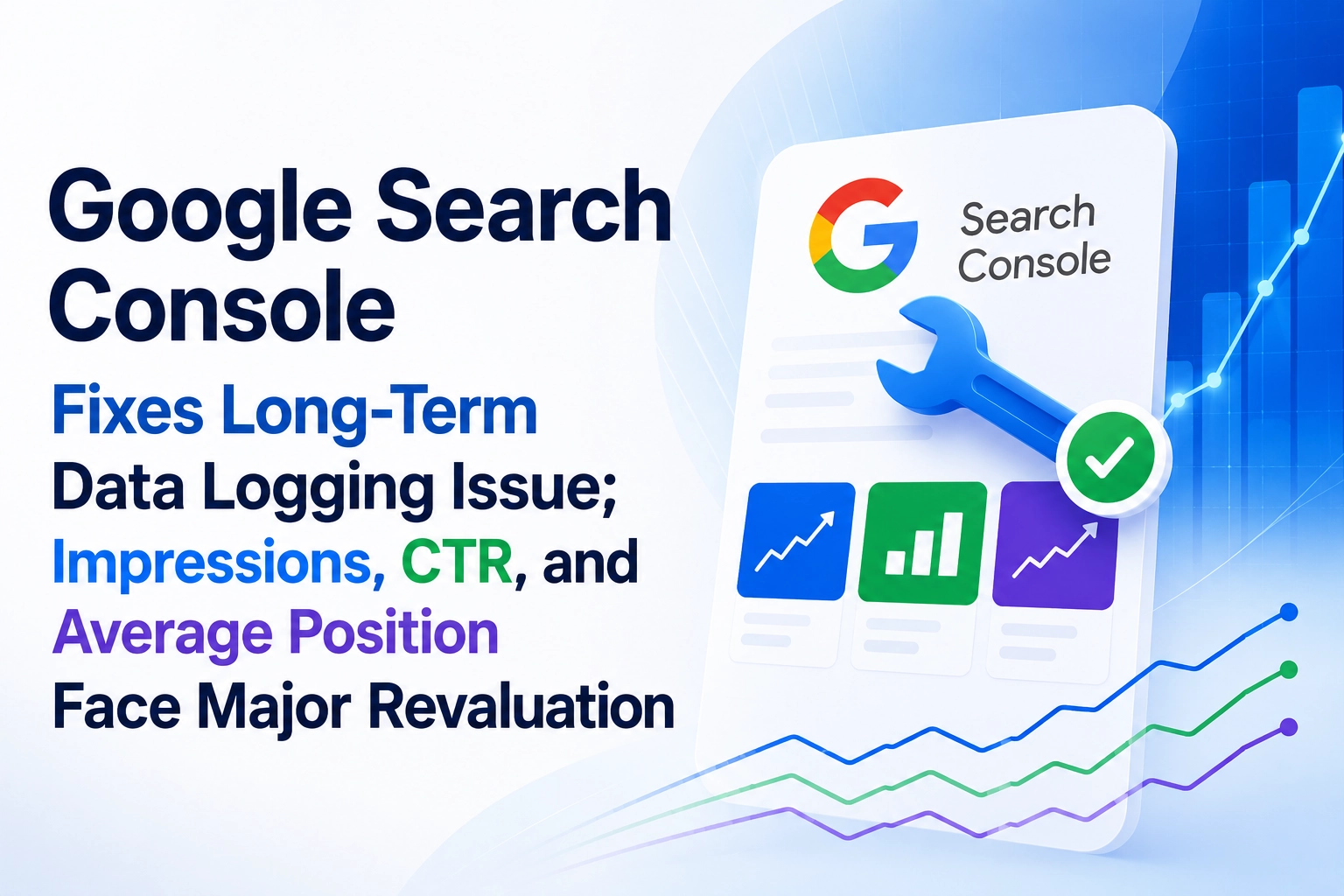

TL;DR Google officially confirmed the fix for a long-standing Search Console data logging error. This bug caused Impressions to be inaccurately recorded during a specific period (from May 13 to April 27 of the following year). As a result, webmasters may observe a sudden plunge in Impressions and drastic fluctuations in associated metrics (CTR, Average Position) within the GSC dashboard. This is strictly a reporting-level display glitch. Actual Clicks, real search Rankings, and actual Traffic remain completely unaffected. There is no need to adjust your SEO strategy due to this data anomaly.
Core of the Event: Google's Official Announcement & Bug Mechanism Analysis
Recently, many SEO experts discovered abnormal cliff-like drops during their data reviews. In response to this phenomenon, Google has finally provided a clear explanation and a fix.
Which Data is Distorted and Which is Safe?
During this data anomaly, not all metrics were compromised. We need to clearly distinguish between "corrupted data" and "safe data":
- Distorted Metrics: Impressions, Click-Through Rate (CTR), and Average Position data have been severely contaminated.
- Safe Metrics: Actual Clicks data is completely accurate and remains entirely unaffected.
When compiling weekly or monthly reports, SEO practitioners must use Clicks as the sole reliable direct reference benchmark for now.
The Nature of a Pure Data Logging Error
When explaining this event to non-technical stakeholders or management, it is crucial to emphasize its nature as a "reporting glitch."
"This is not a site penalty caused by a Core Algorithm Update, but rather a data omission in Google's tracking system."
This means your website's actual performance in the search engine remains robust; it's simply that Google's "counter" temporarily short-circuited.
SEO Industry Impact & Data Credibility Analysis
Data accuracy is the cornerstone of SEO strategy adjustments. This months-long bug has undoubtedly caused a disruptive impact on daily data analysis and KPI evaluations.
The "Collateral Contamination" of CTR and Average Position by Plunging Impressions
From the mathematical logic of data analysis, the omission of Impressions triggers a chain reaction, leading to comprehensive distortion across data dashboards.
- Artificially Inflated CTR: Since CTR = Clicks / Impressions, an abnormally small denominator (Impressions) causes CTR data to show an unreasonable spike.
- Position Drift: Unrecorded impressions often occur at lower ranking positions, which can lead to an abnormal "improvement" illusion in the Average Position data.
Long-Term SEO Impact & YoY (Year-over-Year) Data Gaps
Because this bug lasted for an extremely long period (spanning nearly a year), its disruption to long-term strategic evaluation is profound. When conducting Year-over-Year (YoY) or Quarter-over-Quarter (QoQ) analyses, SEO teams will face severe data gaps. Directly comparing raw GSC data can easily lead to false conclusions of growth or decline.
Ranking Fluctuation Assessment & Common Misconceptions (Community Buzz)
Faced with cliff-like data charts, panic quickly spread within the SEO community and webmaster groups. We need to firmly debunk the following common misconceptions.
Misconception 1: "A drop in Impressions means the site is penalized or SERP rankings have dropped"
This is a false perception that easily induces anxiety. The actual display mechanism of the SERPs has not changed at all. To correct the illusion that "a drop in Impressions equals a loss of the traffic pool," webmasters need to understand that users are still searching normally and seeing your website; it's just not being recorded in the backend.
Misconception 2: "Immediate SEO strategy adjustments are required to save the data"
During a pure logging error period, blind action is an extremely dangerous overreaction. Drastically modifying TDKs (Title, Description, Keywords) or overhauling existing content strategies right now is counterproductive and may actually damage your otherwise healthy, real rankings.
Hot Topic: Why Did It Take Google So Long to Fix/Disclose?
In authoritative overseas communities like Search Engine Roundtable, numerous webmasters have expressed concerns about the transparency of Google's infrastructure. A common question arises: In the face of such prolonged and widespread data omissions, why did Google fail to establish a more agile monitoring and alerting mechanism? This undoubtedly casts a shadow over the trust between webmasters and the search engine.
Historical Precedents & Industry Background
Looking back historically, GSC data anomalies are not unprecedented. Reviewing historical events can effectively soothe team anxieties and provide reference points.
A Roundup of Historical GSC Data Outages
Over the past few years, Search Console has experienced similar Logging Errors on multiple occasions:
- The short-term Discover traffic data loss event in 2022.
- Delayed updates and reporting omissions of index status for some pages in 2023.
According to Google's standard follow-up practices, such lost historical data is usually not backfilled. Webmasters should be mentally prepared to accept a permanent data gap.
The Complexity and Limitations of Search Data Tracking
Under current AI Search (like SGE) and increasingly complex SERP features, Google faces immense technical challenges. Accurately recording massive Impression data globally involves unimaginable computing costs and system pressure. This also reminds us not to treat data from third-party or official tools as absolute truth.
Actionable Strategies for Webmasters & Data Validation Directions
Faced with an established data gap, SEO practitioners need to adopt practical Action Items to ensure the accuracy of business reporting.
Cross-Validation: How to Confirm True Traffic Health Outside of GSC
Don't put all your eggs in the GSC basket. Webmasters should immediately initiate multi-dimensional data cross-validation:
- Google Analytics 4 (GA4): Focus heavily on trend changes in Organic Search Sessions.
- Server Logs: Analyze actual bot crawls and user access requests to obtain the most foundational data feedback.
- Third-Party Tools: Utilize tools like Ahrefs or Semrush to track ranking fluctuations for core keywords.
Report Correction: Annotation Strategies for Looker Studio and Data Dashboards
Automated reports are highly vulnerable to anomalous data. It is recommended to take immediate action in Looker Studio or other data dashboards. Add prominent Annotations to the affected period (May 13 to April 27 of the following year) to prevent the team from misjudging data during future retrospectives.
Shifting the Weight of Current KPI Metrics
During the affected period, traditional SEO KPI systems require urgent adjustments. It is advised to shift the core evaluation metrics entirely away from the absolute values of "Impressions / Average Position" toward "Actual Clicks" and ultimate "Business Conversions," ensuring team goals align with real commercial value.
Closing Advice In the face of a long-term GSC data logging anomaly, the most critical task for SEO practitioners is "managing expectations and aligning information." Please immediately add prominent data anomaly Annotations for this period (May 13 to April 27 of the following year) across all your SEO data dashboards (e.g., Looker Studio). When reporting to clients or management, proactively capture and cite Google's official statements. Lock your reporting focus on the unaffected Clicks and actual business conversions, and never blindly overhaul existing, effective SEO strategies due to a false drop in Impressions.