
TL;DR: Core Takeaways You Must Know
- Official Data: Google's AI mode has surpassed 1 billion global MAUs, with query volume doubling quarter-over-quarter, driving overall Search volume to an all-time high.
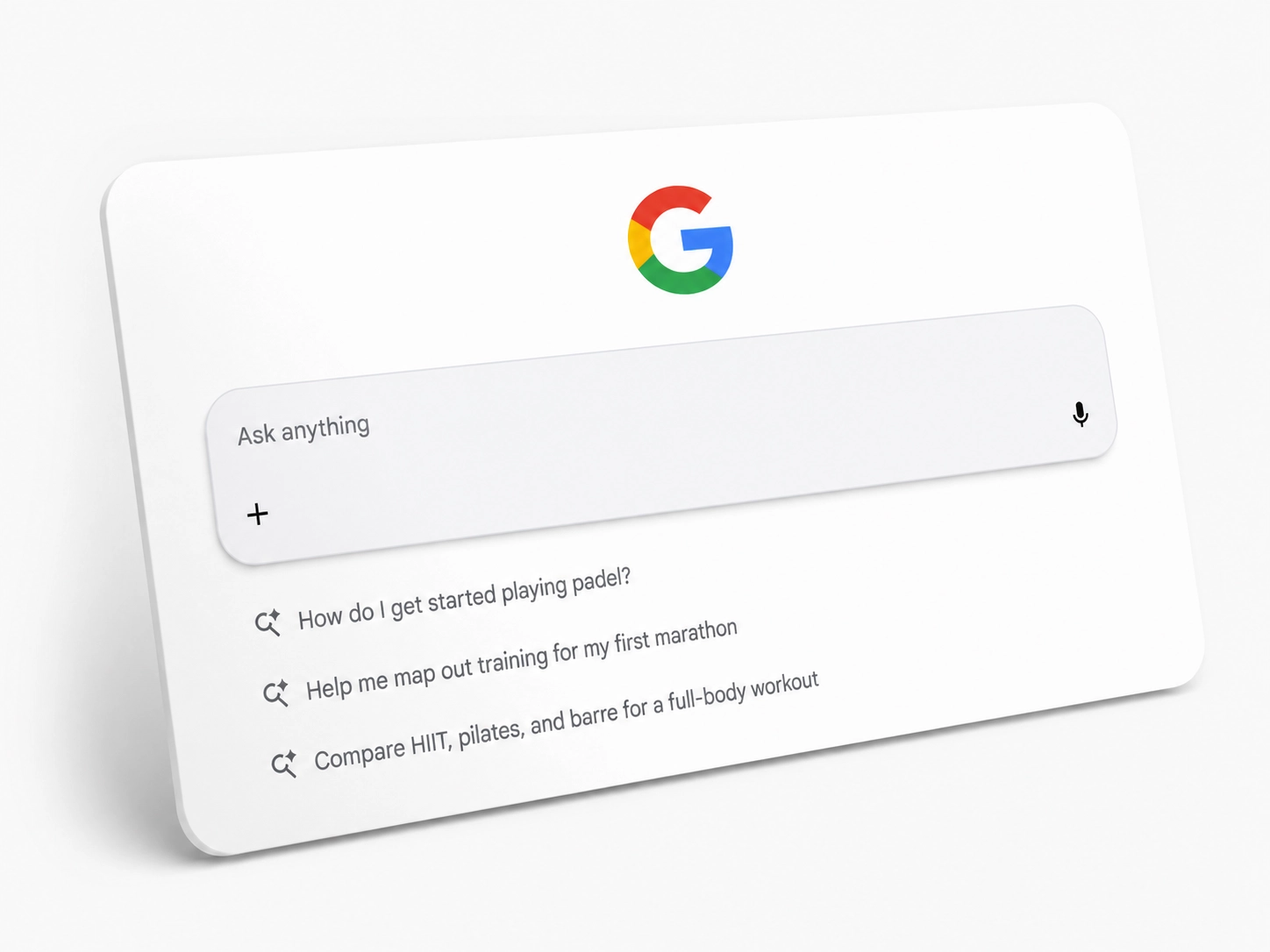
- Search Behavior Mutation: The average query length in AI mode is 3 times that of traditional search; over 1/6 of searches use voice or image (Image Search MoM growth exceeds 40%).
- Search Intent Shift: The growth rate of "Planning" and "Brainstorming" queries far exceeds the average.
- Core SEO Impact: The traditional short-tail keyword traffic pool is being diluted, the risk of Zero-click Search is intensifying, and content strategies must pivot towards conversational long-tail, multimodal, and Top of the Funnel (ToFu) intents.
Event Anchors and Industry Background: AI Search Transitions from "Experiment" to "New Normal"
Official Statements Send Strong Signals Google recently announced with a high profile that the AI mode has successfully bridged the user experience gap between traditional search engines and conversational AI. This transformation has not weakened search demand; instead, it has driven Google's total query volume to an all-time high.
"AI is making search more natural and intuitive, and the way users ask questions is undergoing a fundamental change." — Official Google Statement
From "Traffic Doomsday" Panic to Ecosystem Reshaping Looking back a year ago when SGE (Search Generative Experience) was first launched, the SEO industry was briefly plunged into a "traffic doomsday" panic. Today, with the full rollout of AI Overviews, we see that the actual ecosystem has not been destroyed, but rather undergone profound folding and restructuring.
Long-Term SEO Impact is Set in Stone Current data indicates that AI search is no longer a fringe beta project. It has become the underlying infrastructure reshaping the core traffic distribution mechanism of Google Search. SEO practitioners must discard illusions and embrace the new normal.
Core Data Breakdown and Traffic/Ranking Impact Analysis
Query Length Surges 3x: Traditional Exact Match is Completely Ineffective The average query length for users in AI mode has reached 3 times that of traditional search, with natural language and long-tail keywords dominating. This means the short-tail ranking strategies that previously relied on "Exact Match" are rapidly failing, making semantic understanding the core focus.
1/6 Multimodal Searches: The Rise of Visual and Voice SEO Data shows that over 1/6 of search requests are completed via voice or image, with image search growing over 40% MoM (Month-over-Month). The weighting of Image SEO (such as high-quality Alt text and schema markup/structured data) and local voice search optimization is receiving an epic boost.
Intent Shift: Dividends and Hidden Dangers of Informational Content The surge in "Planning" and "Brainstorming" queries containing "where to" or "ideas for" marks a significant upward shift in user search intent. While this brings massive impression dividends for informational content, it also plants the hidden danger of extremely high bounce rates.
Beware of Traffic Illusions: Record Search Volume ≠ Record Website Traffic Although Google claims "search volume has hit an all-time high," SEOs must stay clear-headed. This does not equate to a synchronized growth in organic traffic acquired by websites. The Zero-click Search phenomenon caused by AI traffic interception is becoming increasingly severe.
SERP Evolution and Community Controversy Hotspots
SERP Visual Hegemony: Traditional Ten Blue Links CTR Plummets AI Overviews now firmly occupies the core above-the-fold position in search results, drastically squeezing the visual space for organic rankings. This has caused the Click-Through Rate (CTR) of the traditional ten blue links originally in the Top 3 to experience a cliff-like drop.
Webmaster Community Anger: Crawling Attribution and Content Scraping Controversies On platforms like Search Engine Roundtable and X, webmasters' complaints are rising one after another. The core pain points are focused on "extremely vague AI mode traffic attribution" and massive amounts of original content being directly "scraped" and extracted by AI, reducing websites to free corpora.
Correcting Extreme Misconceptions: SEO is Not Completely Dead Facing the impact, many have thrown out the extreme argument that "SEO is dead," but this clearly deviates from the facts. Traffic has not vanished out of thin air; instead, it is shifting towards UGC platforms (like Reddit) and large entity websites with exceptionally high Trust/Authority.
Webmaster Response Strategies: Comprehensive Restructuring of the SEO System
Content Architecture Upgrade: From Keyword Stuffing to Entities and Q&A Faced with complex queries that are 3 times longer, traditional content architecture appears inadequate. Content teams must pivot from "keyword stuffing" to "Entity & Q&A," building dense FAQ matrices around core topics.
Multimodal Asset Building: Catering to the 40% Growth in Visual Demand Given that image search is surging at a rate of 40% per month, the construction of visual assets for websites must be put on the agenda. Significantly improving image-text relevance and increasing the proportion of original infographics and high-quality visual content are key bargaining chips for securing AI recommendations.
Top of the Funnel (ToFu) Positioning: Seizing AI Citation Sources In response to the surge in planning and decision-making queries, brands need to position themselves early at the Top of the Funnel (ToFu). Develop a large number of comprehensive guides, horizontal comparison reviews, and inspiration listicles, striving to become the preferred citation source when AI Overviews generate answers.
Actionable Guide: How to Verify and Track in Google Search Console (GSC)
GSC Data Anomaly Troubleshooting: Identifying Clues of AI Traffic Since it is currently impossible to filter AI traffic separately, webmasters need to look for clues within existing GSC data. If you notice a sudden surge in Impressions for certain pages, paired with an abnormal drop in Click-Through Rate (CTR), this is typically a classic signature of triggering AI Overviews.
Regular Expression (Regex) in Practice: Precisely Filtering Conversational Long-Tail Keywords
Leveraging GSC's Regex filtering feature can effectively extract queries popularized by the AI mode.
It is recommended to use Regex codes like ^(how|what|where|why|best ideas for|plan a).* to precisely track the impression trends of conversational long-tail keywords.
Leveraging Third-Party Tools: Monitoring SERP Features Changes Relying solely on GSC is no longer sufficient; it is recommended to integrate professional SEO tools like Ahrefs or Semrush. Use their SERP Features tracking capabilities to monitor in real-time whether your target keywords have triggered AI Overviews, thereby dynamically adjusting your optimization strategy.
💡 Conclusion and Actionable Advice
Facing an AI search mode with up to 1 billion monthly active users, SEO practitioners must completely abandon their adversarial mindset and traffic anxiety. Stop obsessing over the ranking fluctuations of a single core keyword. Instead, immediately audit your existing content inventory and tilt resources towards high-quality original content that satisfies "in-depth decision-making" and "complex planning." In the AI era, there is only one future SEO moat: becoming the "Source of Truth" that AI engines absolutely cannot bypass.